Hybrid Hummer
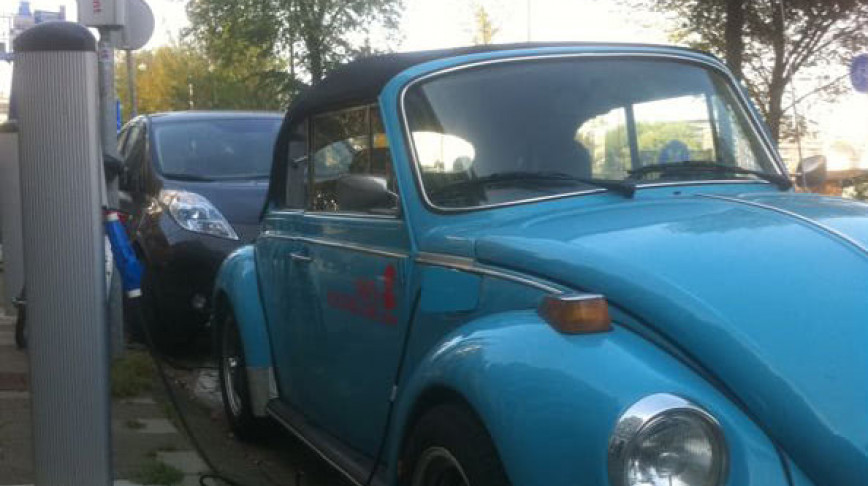
Who knows after some future energy crisis, it becomes en vogue to use a horse to pull your horseless carriage. For now it is our peculiar image of the week. Created by Walter Robinson.
With our attempts to cultivate nature, humankind causes the rising of a next nature, which is wild and unpredictable as ever. Wild systems, genetic surprises, autonomous machinery and splendidly beautiful black flowers. Nature changes along with us.
Who knows after some future energy crisis, it becomes en vogue to use a horse to pull your horseless carriage. For now it is our peculiar image of the week. Created by Walter Robinson.
Good old analog technology, now even better than ever before. Artist Bartholomäus Traubeck created a hyper-nostalgic record player that, rather than making music from vintage vinyl records, uses slices of woods to generate sound.
The player analyses a tree’s year rings for their strength, thickness and rate of growth as input for a generative algorithm that outputs piano music. Watch the video to enjoy the sound of a tree and appreciate the beauty and variety of nature from a whole new unexpected perspective.
Thanks Yuri Keukens.
Along with the Heck cattle and Scottish Highlanders, another reconstructed species roams the Dutch dunes. The sturdy Konik horse, also known as the Polish primitive, is the result of an attempt to ‘breed back’ the tarpan, an extinct subspecies of wild horse. A forest-dwelling horse with a distinctive silver-gray coat, tarpans once roamed Western Europe through Russia. The endangered Przewalski’s horse is the only surviving subspecies of the wild horse, Equus ferus, found only in zoos and in wild herds that have been reintroduced to places like Mongolia and Chernobyl.
The last wild tarpans were extirpated between the 1820s and 1890s, while the last captive tarpans died out somewhere between 1910 and 1920. Sources are unclear whether the final herds were true tarpans, tarpan mixes, or domestic horses that happened to look a lot like their wild relatives. It may be extinct, but the tarpan still clings to existence via cultural memory and scattered genes. The fact that many “primitive” breeds of domestic horse still graze the world’s meadows has tempted hopeful breeders to resurrect the tarpan on at least three occasions.
A new Dutch landscape with windmills up to 120 meters. Designed by NL Architects.
This disposable aluminum barbecue on top of an original Weber barbecue nicely illustrates how people – time after time – employ technology to make life more convenient while trying to preserving essential qualities. Successfully or not. Judge for yourself.
This peculiar image of the week was made with the Next Nature spotter for iPhone.
Presumably the only place on Earth where burkas & protein supplements coincide in jolly harmony. Peculiar image of the week. Photo by me.
The appliance company Bosch claims that its new technology keeps food so fresh that meat from the Ice Age (and presumably the Cretaceous as well) can be stored without incident for millennia. From a next nature perspective, we’re less interested in refrigerator advertisements than where we can find a freshly cloned deinonychus ’wing.’ If we doused it in enough spicy barbeque sauce, it might even taste like chicken. Peculiar image of the week.
Via ScaryIdeas.
To mark the twelve-year restoration of the Sint Jan cathedral in Den Bosch, a new statue of an angel carrying a mobile phone was added to the building. The angel joins the many other statues adorning the outside of the mediaeval cathedral.
Member of the churchboard, Pieter Kohnen, explained the modern frivolity by explaining that “angels help us to communicate with the invisible world. Specifically, in these days, in which so many modern communication means are available, angels want to remain reachable.”
The statue was created by sculptor Ton Mooy, who was responsible to for the renewal of the statues on the cathedral. The last in the series needed a modern twist, he decided. The phone has just one button, the artist says – it directly dials God. As well as holding a mobile phone, the carved stone angel is also wearing jeans. Peculiar image of the week.
Japanese professor Hiroshi Ishiguro from Osaka University has quite a track record of threading the uncanny valley. Remember his Doppelgänger Robot and Geminoid Female? His current proposal brings new dimensions to mobile communications: Humanoid dimensions.
Although our human body language is one the most effective and natural channels for communication, it plays no role in mobile communication so far. Hence Hiroshi Ishiguro teamed up with NTT Docomo and Qualcomm to develop a humanoid shaped phone, called Elfoid, which adds an element of realism to long-distance communication by recreating the physical presence of a remote person.

The fleshy urethane skinned prototype has a deliberate genderless and ageless appearance, as this should allow for the projection of the personality of any caller. Equipped with a camera and motion-capture system, the Elfoid phone will be able to watch the user’s face and transmit motion data to another Elfoid phone, which should then reproduce the face and head movements in real-time.
The Elfoid phone immediately reminded us of the voodoo communication device for lovers, conceptualized by Yu Yu Chien some years ago. Although some of the negative connotations of voodoo are better avoided, projecting a remote person in a hand held doll, has proven to provide for a powerful psychological effect. Contrary to many of Ishiguro’s earlier humanoids the Elfoid phone combines human realism with a strong symbolic quality that could turn out to be a winning team.
Digital pigeon post its private, peaceful, none-polluting and secure. Peculiar image of the week.
Via Rising Tensions. Thanks Marco.
What do you get when you combine bike parts, an electric motor, and a cow skeleton? Our peculiar object of the week was created by artist Billie Grace Lynn.
Seen at Museum of Art & Design. Image NYTimes.
Milk is good for you and we all should drink lots of it. Common knowledge so far, but do you actually know where milk comes from? Supermarket? Factories? Luckily this milk packaging provides you with the correct answer: Milk comes from Bottles. Peculiar image of the week (Sorry for the crappy image quality).
Via SuperdeBoer. Thanks Mark, Dennis.
Created for the niche target group of nostalgic button freaks, by Aram Bartholl.
Haroon Baig from Germany has figured out a way to key up the amount of 50+ Twitter addicts.
This progressive nostalgic cuckoo device displays new tweets from any twitter stream or search on the built-in display, “accompanied by the charming yet obtrusive call of a mechanical cuckoo popping out of the clock”.
As technology progresses we constantly have to adapt ourselves to an ever changing media landscape. Designers try to smooth the changes with a ‘progressive nostalgic‘ strategy: linking newfangled technologies with familiar phenomena.
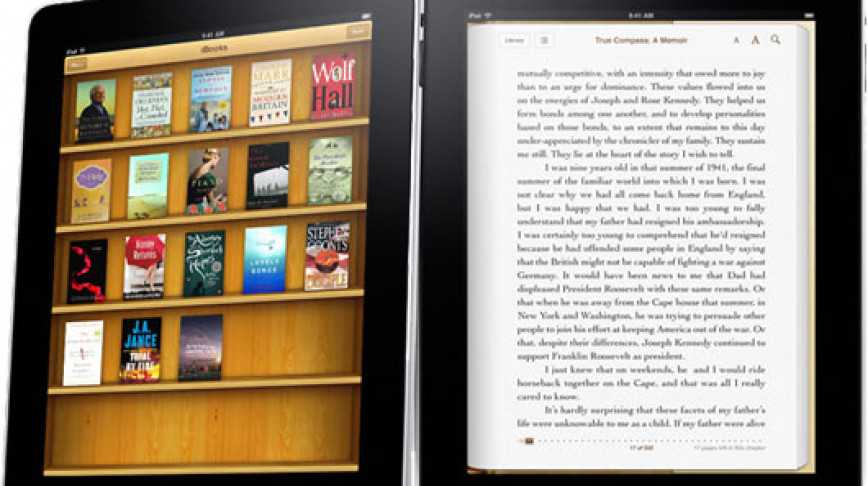
Flipping through the bookshelf on your iPad, provides the owner with the familiar feeling of having an easily accessible library of books. The nostalgic reference to a wooden bookshelf makes the modern notion of a digital book collection graspable. At the same time, the digital storage of books is expected to have a huge impact on the publishing industry and the actual use of books: similar to the first cars that were designed as ‘horseless carriages’ and the ‘envelope’ icon you click to open your email application, which acceptance caused an drastic decrease in the use of actual envelopes, the digital book cabinet is a first sign of extinction for the physical book cabinets it so elegantly simulates.

A technology that already became extinct is simulated in the iRetroPhone rotary dialer application for those who want to dial grandma’s style.
Urban intervention, naughty boy-style! The public media interventionists of VR/Urban have designed a cool tool to intervene into next nature: the SMSlingshot. A wooden, embedded interaction device –equipped with an ultra-high frequency radio, a hacked Arduino board, laser and batteries – to shoot your own message directly onto a building or media facade. With some tucked away beamers, it works like magic. Reclaim the screens!
In Next Nature, not only old nature is being idealized. Because of the rapidness of new emerging technologies, we have a tendency to dwell on earlier prototypes. To recall memories, or to give that ‘real’ experience. We call this bittersweet longing for past technologies technostalgia. Technostalgia shapes our memories, our past and thus our present.
Coca-Cola, 2006, Vase from the Neolithic Age (5000–3000 BC), paint, 45.4 x 36 x 36 cm. Our peculiar object of the week was created by Ai Weiwei. Courtesy Galerie Urs Meile, Beijing – Lucerne. Image: Ian Hobbs.