Manufactured Landscapes
Remaking the World for our Needs
Humans hack the landscape to be more productive and predictable. Though we have intentionally transformed the landscape since the first farmer put a seed in the ground, in the last century our efforts have become planet-scale.
While we manipulate old nature through dams, planned forests and irrigation, we create a next natural landscape of highways, vast cities, and garbage dumps. How do we control these? And is control even possible?
Contents
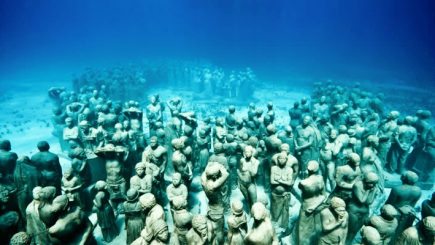
Man-Made Coral Reefs
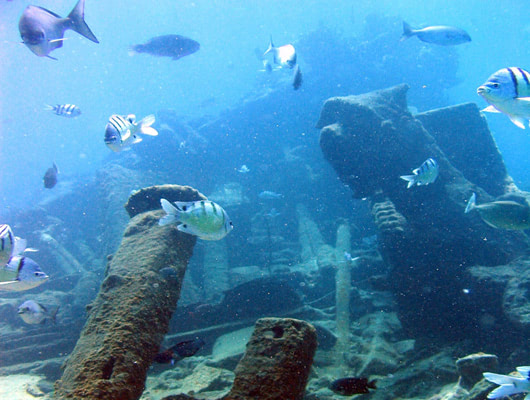
Last week I had the pleasure of being the studio guest at the Earth Beat radio show. I was treated with examples of ‘artificial nature’ and asked to respond from a Next Nature perspective. …
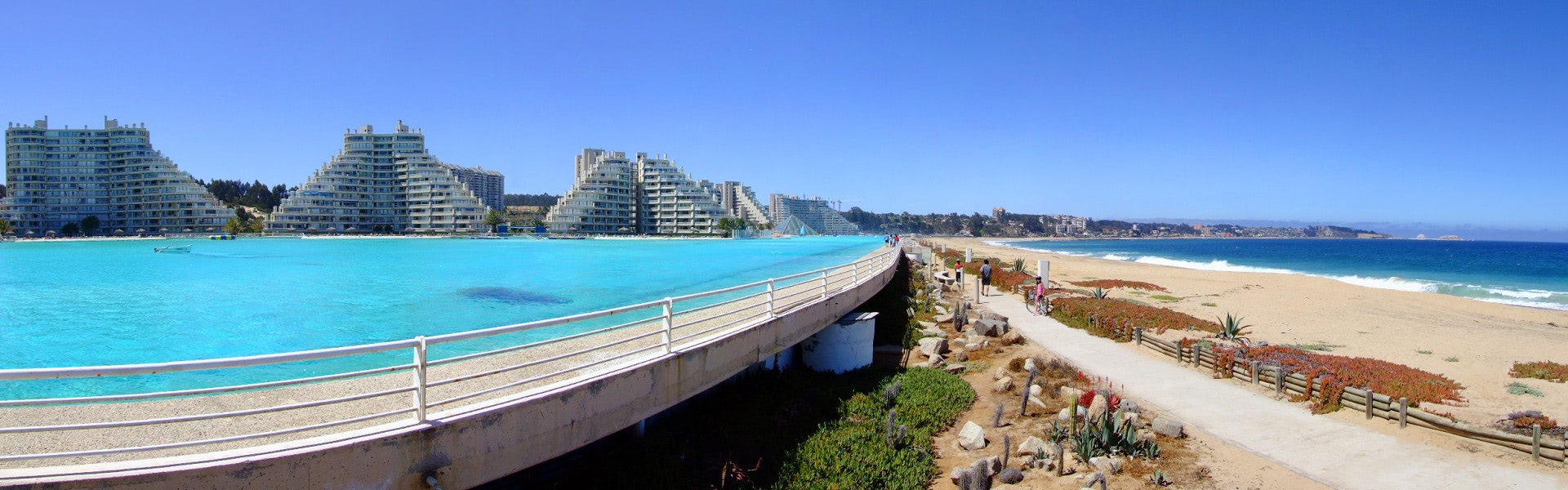
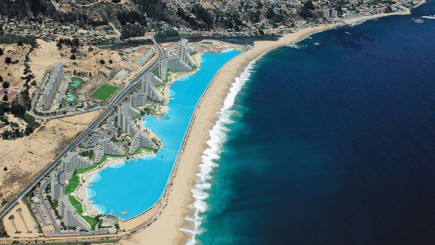
Seaside Swimming Pool
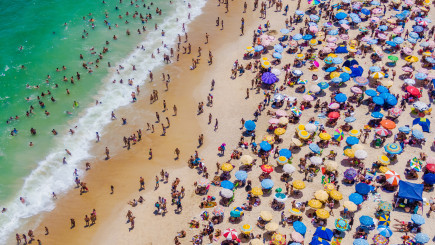
Always good to see a swimming pool exactly where you need it. At San Alfonso del Mar resort in Chili they know how to cater people that love nature – except for the rocks, bites …
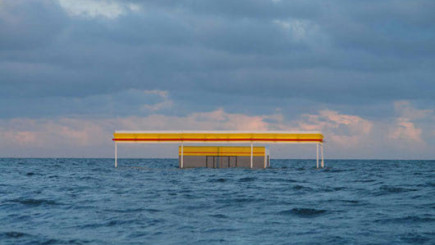
Fata Morgana
Finally… A gas station in the ocean! If we all rigorously continue filling up our tanks, this fiction can become a reality one day.
This is not a photoshop, this is our peculiar object of …
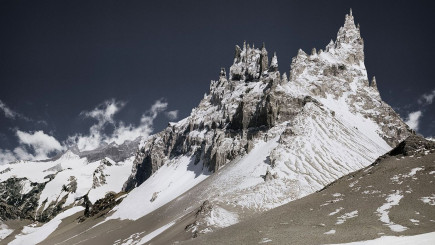
Michael Najjar – High Altitude
The rock formations in the High Altitude photo series don’t exist physically, yet they are very present in our society of simulations. The photos visualize the development of the leading global stock market indices over …
Old meets Next
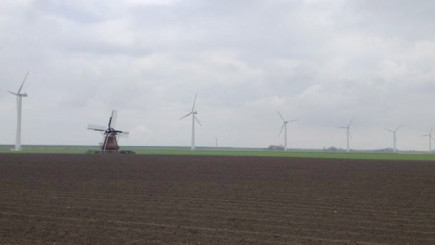
Our peculiar image of the week was spotted in Friesland with the Next Nature spotting app for iphone. Add your spot and win a copy of the Next Nature book.
Pimp My Planet
We live in a time where everything or everyone can be upgraded or ‘pimped’. After the worldwide acceptance of plastic surgery and pimped homes, will eventually everything be pimp-able? Even our own planet..
Next Nature Services
Intentionality separates culture from nature. A dog is intentional, a fox is not; a park is intentional, a forest is not. Since trash, ruined buildings, and automated computer programs are unintentional, they are also a type of nature. Nature provides human society with valuable ‘ecosystem services’ such as water purification or erosion control. Next nature provides ecosystem services of its own, although they might not be what we expect.
An old rubbish dump was transformed into an indoor piste, giving new value to something that once had none.
— Bas Haring
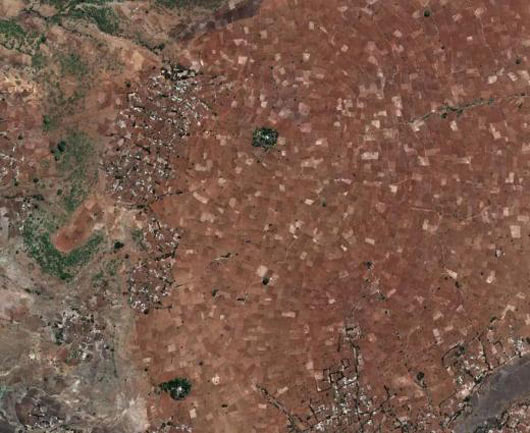
In Ethiopia, the Bible Grows a Forest
What are those two green dots in the dusty landscape? Ethiopian Orthodox Christians believe in preserving forests around their churches as living symbols of Eden. Since 95% of the country’s historical forests have been stripped for farmland and fuel, these ‘church forests’ are the last refuge for native plants, birds and insects. The church grounds frequently contain springs that serve as clean sources of drinking water for the surrounding community.
Yet even Eden needs a fence. Religious belief might have kept the trees, but locals are slowly chipping away at the margins of the forest to expand farming plots and to gather firewood. Clergy members use the trees to repair the church buildings, and sell forest plants for food and dye. Tropical ecologist Margaret Lowman is raising funds for a simple solution: building fences around the forest to keep livestock out, and to clearly demarcate the boundary between sacred and cultivated land.
21st Century Dutch Landscapes
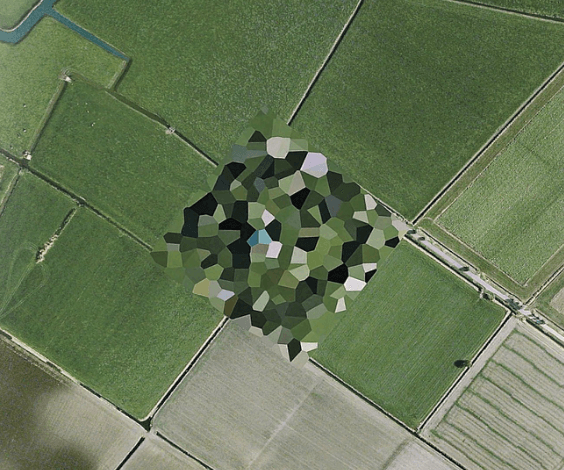
For centuries the Dutch landscape has been known for its highly cultivated formal structure, however with the introduction of Google Maps a whole new layer of formalization has been added.
Like many other governments the Dutch censor the visibility of political, economic and military locations on the satellite imagery, but while most countries blur, pixelate, and whiten out sites of interest, the Dutch method of censorship is notable for its stylistic intervention of bold, multi-coloured polygons over sites. The result is a landscape occasionally punctuated by sharp aesthetic contrasts between secret sites and the rural and urban environments surrounding them.
Allergy-Free New York
We recreate the landscape according to our image of nature and to match our needs and expectations. This also applies for the urban landscape. In the NY Times of last week, Thomas Leo Ogren pleas for Allergy-Free Gardening in New York City, to improve the quality of life in the Big Apple. It seems there is a big market for hypo-allegenic urban tree species…
BY THOMAS LEO OGREN – As certain trees burst into bloom in spring, their pollen wafts through the air in a wanton attempt to reach receptive blossoms. Millions of people with allergies pay the price, in sneezing, wheezing, coughing, drowsiness and itchy, watery eyes. They needn’t suffer so much. Cities could reduce the misery by planting street trees that produce very little pollen or none at all.
Street trees weren’t always as allergenic as they are today. Back in the 1950s, the most popular species planted in the United States was the native American elm, which sheds little pollen. Millions of these tall, stately trees lined the streets of towns and cities from coast to coast. Sadly, in the 1960s and ’70s, Dutch elm disease killed most of the elms, and many of them were replaced with species that are highly allergenic.
This has caused trouble for Americans with allergies — as many as 30 percent of adults and 40 percent of children — most of whom are sensitive to pollen, as well as for the many millions who have allergy-induced asthma. Although some pollen can be carried great distances by the wind, most atmospheric pollen comes from plants growing nearby. In other words, the pollen that’s making you …
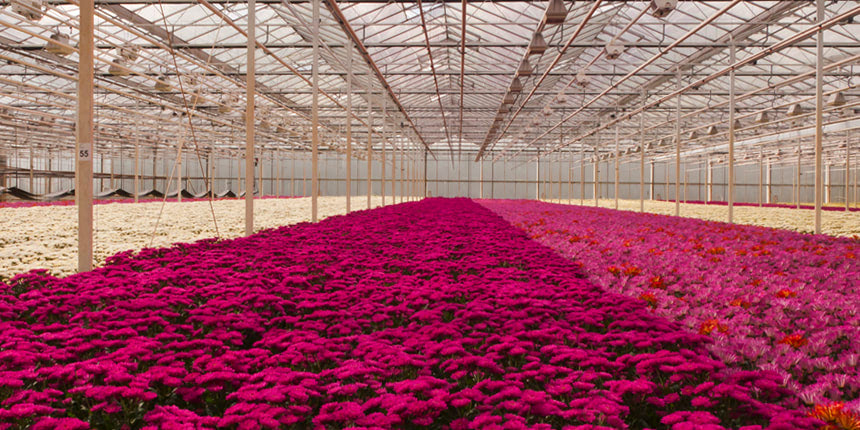
In Holland, greenhouses cover 10,000 hectares, producing flowers and tomatoes in the dead of winter.

Sand Engine Reinforces Dutch Coastline
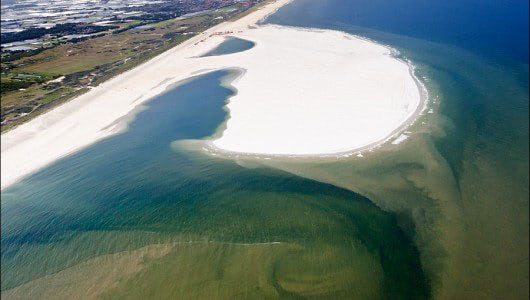
Now here is an hands-on example of ‘guided growth‘ as a way to steer complex systems.
Part of the Dutch coastline is currently being reinforced by creating a ‘sand engine’. This involves depositing 21.5 million cubic meters of sand in the shape of a hook extending from the coast near Ter Heijde. The sand is expected to be spread along the provincial coastline by the natural motion of wind, waves and currents. Ultimately the coast is expected to be broader and …
In the Future, We Will Mine for Plastic
Peak oil, the point when petroleum extraction is at its maximum, may have already occurred sometime in the last few years. Not only affecting whether we drive a Humvee or not, engineer Debbia Chachra reminds us that peak oil also means peak plastic.
Not limited to water bottles and cheap toys, plastic is vital to medicine, industry, agriculture, and transportation. From the soles of your shoes to the carpeting in your house, it’s harder to find an object that doesn’t incorporate petrochemicals than one that does. “Plastic,” Chachra writes, “is so ubiquitous that it’s almost invisible.”
Plastic’s durability means that it winds up everywhere, welcome or not: In the bellies of albatross, in giant trash vortexes in the pacific, on beaches and in our blood. Although certain microbes may eventually evolve to eat …

Hightech landscape
Discarded shells of computers and monitors float in a drainage canal in Accra, Ghana. Our peculiar image of the week was made by Peter Essick. Via National Geographic.
Human Landscape
Our peculiar image of the week was created by artist Levi van Veluw, who reinvents the classical fine art of landscape painting, by moving from the traditional ‘oil on canvas’ to the use of his …
Monokultur
A peculiar photo series by Hubert Blanz.
Related post: Lost on the Freeway?, Observing Next Nature, Waves of Asphalt, Interchange, Exploding City, Magic Highway USA.